Your basket is currently empty!


Industry compliant temporary protection

ClosedLoop remanufacturing in the UK

Supporting your sustainability targets

Over 30 years of construction expertise
27 February, 2024
Fire safety on flat roof projects has come under the spotlight as a result of the reviews carried out in response to the Grenfell Fire. Non-combustible and flame-retardant materials that remove the risk of fire and provide continuous fire resistance are now a requirement for the flat roofing industry.
We’ve outlined below some of the regulations that require compliance and highlighted a Protec product that provides a compliant solution to ensuring projects are protected from foot traffic and material damage during construction and refurbishment.
Flat roofing – fire safety and complying with Building Regulations 2010.
Building Regulations standardise building practices across the country, covering aspects such as structural stability, fire safety, ventilation, sanitation, insulation (thermal and acoustic), and accessibility. The latest requirements are outlined in the Building Regulations for England 2010*
Of particular relevance to fire safety are Part B of the building regulations which cover fire safety within and around buildings. The Grenfell Fire prompted an independent review of Part B and, in 2019, the Ministry of Housing, Communities and Local Government (MHCLG) published a new clarified Approved Document B.
Changes made included ensuring the document used plain English, and that it offered clear guidance for building owners to ensure they meet regulations and there is no misunderstanding of their responsibility.
On 1 June 2022, further changes in regulations were introduced for the roofing industry, which put additional emphasis on the use of non-combustible materials, the importance of continuous fire resistance across the entire structure (roofs, walls and attachments), inspection and certification.
More detail on these can be found in the Statutory guidance: Fire safety: Approved Document B: Building regulation in England covering fire safety matters within and around buildings.
Commercial building projects over £20m in value are also subject to the Joint Code of Practice guidance on Protection from Fire on Construction Sites and Buildings Undergoing Renovation (Tenth edition) which states all temporary protection materials must conform to LPS 1207 Standard.
Traditional protection materials used on flat roofs such as plywood are not JCoP compliant and must not be used on these high value projects. Doing so risks negating insurance conditions, leaving contractors potentially facing major costs as well as reputational damage.
Ensuring compliance with Building Regs and JCoP
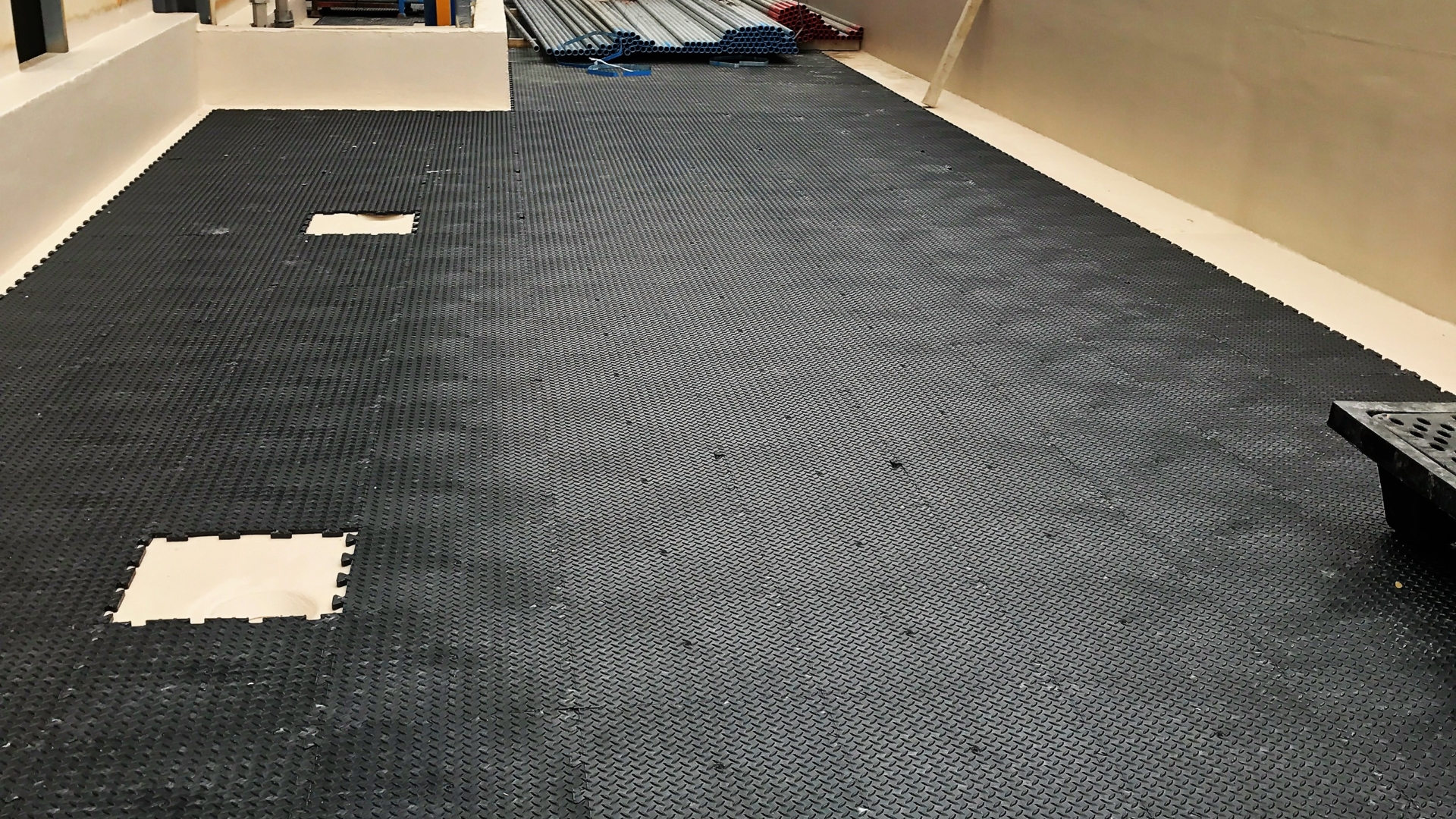
In response to the tightening of regulations, Protec have added RhinoTile to our temporary protection range. RhinoTile is an easy to fit, interlocking flame-retardant PVC tiles for hard wearing protection of exterior decks and surfaces. Made from 100% recycled material, which is resistant to most chemicals and solvents, is easy to clean and offers anti-fatigue properties. The tiles are also reusable and fully recyclable helping support contractor sustainability agendas. RhinoTile can simply be locked together, needing only a rubber mallet to fit. And for enhanced safety yellow edgings are available, forming a sloped and highly visible edge.
To find out more about RhinoTile contact our Customer Service team on 01625 855 600 or order online at protection.co.uk
*Please note that Building regulations in Ireland, Scotland and Wales are similar in their aims to ensure fire safety, but they have distinct sets of regulations and guidance documents, which can differ from those in England.
Share